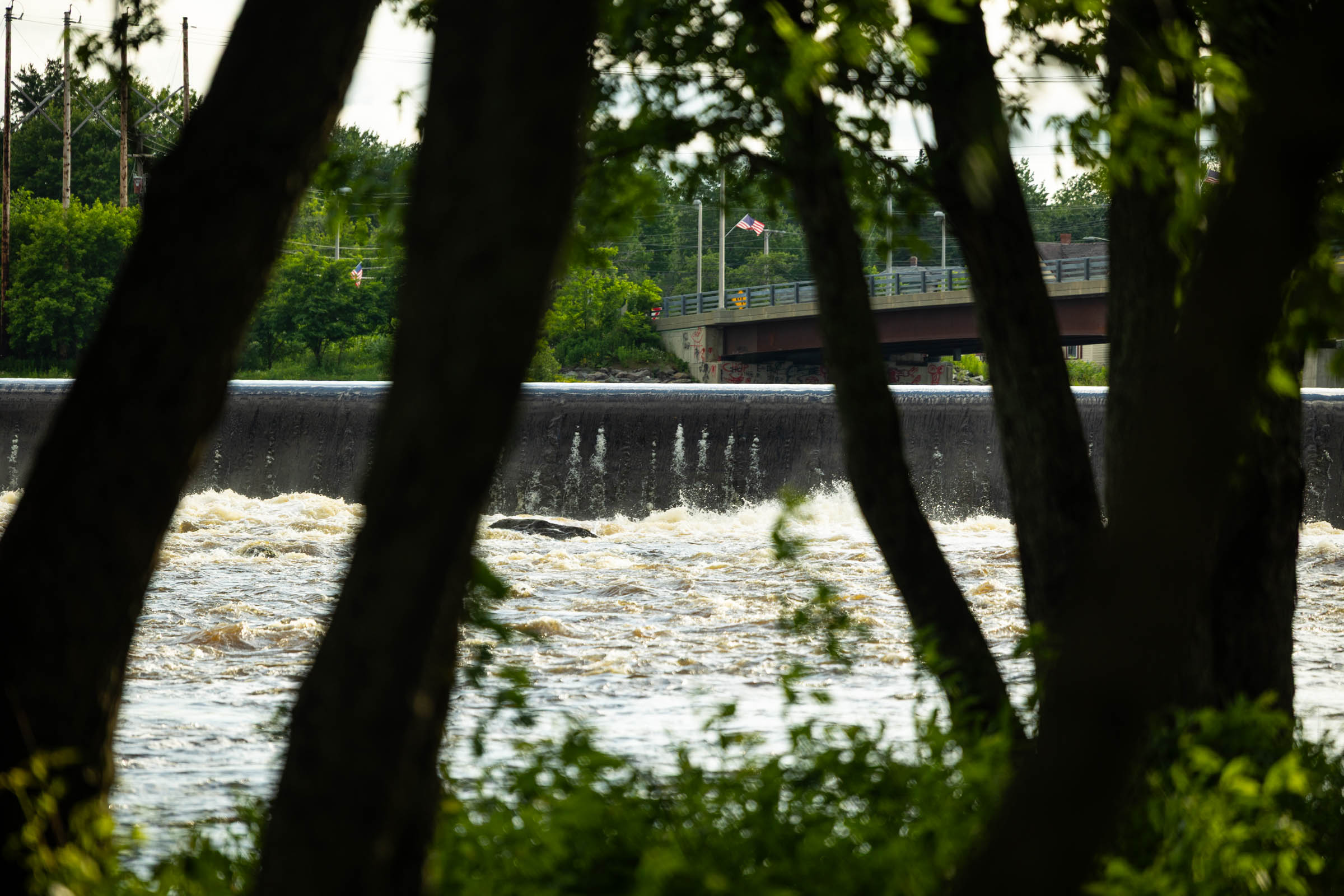
In 2024, 1,560 Atlantic Salmon passed through the Milford Dam just south of Penobscot Nation – Indian Island on the Penobscot River heading upstream to spawn.
In 2014, the salmon hit a low point with fewer than 250 returning fish. Atlantic Salmon leave the ocean and head into freshwater to find their natal stream to spawn. Once they’ve completed the spawn they turn around and head downstream back to the ocean and repeat this astonishing feat year after year.
This summer a few of us got together to paddle a small portion of the Salmon’s annual journey. The paddle began with a half-mile hike into a tiny tributary in the upper watershed named Holmes Brook. A husband-and-wife duo, a mom with two kids and I made up our group of six. We shared a love for all things water and have spent a fair bit of time paddling or rowing in the waters of Maine in a raft or canoe. These small tributaries and high narrow streams were better suited for stand-up paddleboards. SUPs let us access the skinnier waters but also prevented us from bringing too much stuff, which would make the inevitable portages easier.
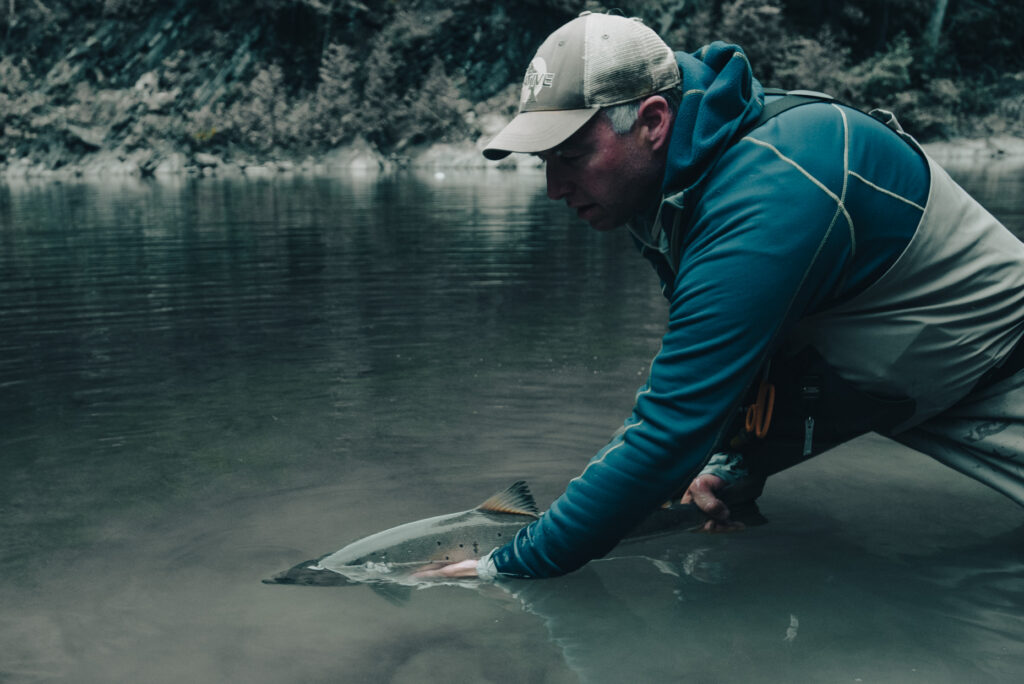
For me, it was important to start at the headwaters. In 2022, Trout Unlimited/AMC and other non-profits had put in work to restore parts of the Penobscot River watershed. I wanted to see if the habitat restoration had been successful. I must say after only a year the logs and placed wooded debris looked like it was already having an effect. These tributaries once were the destination for spawning Atlantic Salmon, but after decades of hard cutting and poor forest management they no longer created a thriving ecosystem for fish to live or spawn.
Thanks to efforts to restore these habitats, wild Eastern Brook Trout and eventually Atlantic Salmon young will re-populate these small pools and riffles. Hopefully getting fat and strong on the abundance of black flies and mosquitos. We certainly contributed to keeping that part of the food chain healthy during our hike-in and each evening and morning of our trip as we tried to cook meals.
A similar project but in the Kennebec River headwaters, we started on the Sandy River and followed that river down into the Kennebec River. The Sandy River contains some of the best Atlantic Salmon spawning habitat but it is mostly blocked by 4 dams between the ocean and the spawning areas. To see more of the Sandy River Paddleboard Adventure click here, or read about our source to sea paddle on the Saco River with Paddleboards.